

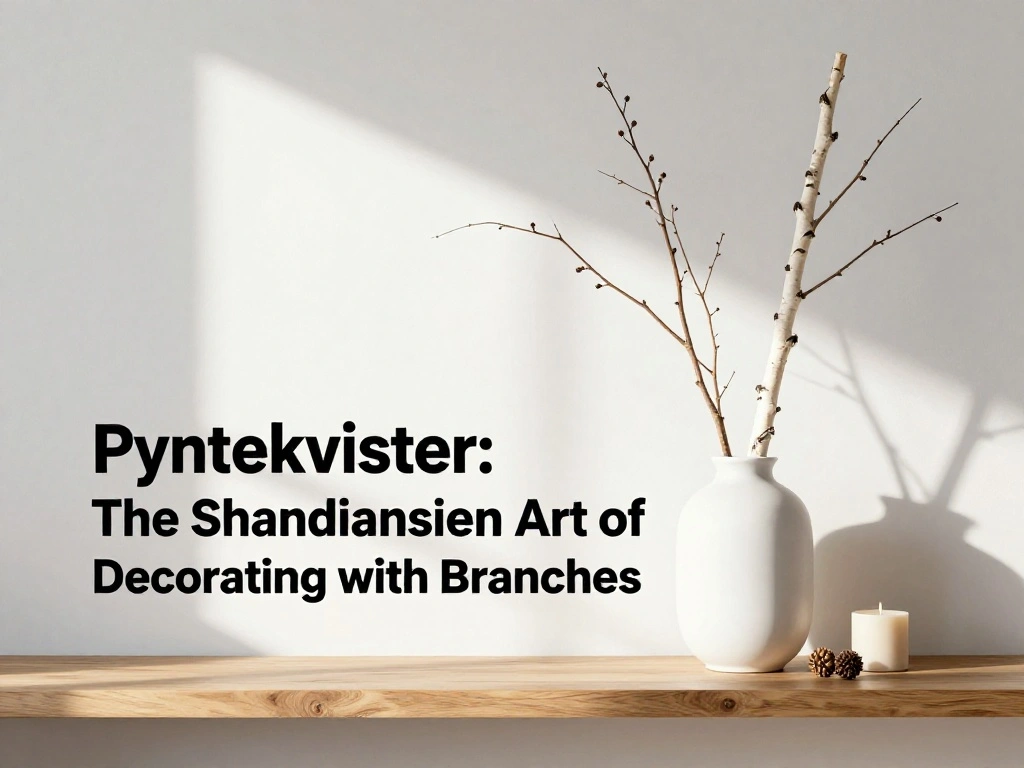
You’ve probably walked past a beautifully styled corner in a magazine photo — a tall glass vase holding a few bare, elegant branches, maybe with tiny fairy lights wrapped around them, sitting quietly against a white wall. That understated, calming arrangement? That’s pyntekvister. And once you understand what it actually means, you’ll start seeing it everywhere.
Pyntekvister is a Norwegian word that brings together two simple ideas: “pynte,” meaning to decorate, and “kvister,” meaning twigs or branches. Put them together and you get something that sounds far more poetic than “decorative twigs” — and honestly, the whole concept is far more meaningful too. It’s not just about putting a stick in a jar. It’s a design philosophy rooted in centuries of Scandinavian living, where the outdoors was always welcome indoors, and where beauty was never expected to be loud.
This guide covers everything you need to know about pyntekvister — where it came from, why people love it, how to style it through every season, the mistakes most beginners make, and the easy steps to create your own arrangement starting today.
What Pyntekvister Actually Means and Where It Comes From
The story of pyntekvister begins in Nordic rural households, long before interior design had a name. In countries like Norway, Denmark, and Sweden, winters are long, dark, and cold. Sunlight disappears for months. People spent most of their time indoors, and naturally, they wanted to bring something of the outside world with them — the texture of bark, the curve of a branch, the reminder that spring was coming even when it didn’t feel like it.
Families would collect twigs and branches from the surrounding forests and landscape, bring them indoors, and arrange them in simple vessels. In winter, bare birch branches might be decorated with small candles or ribbons to bring light into dark evenings. In spring, budding branches were placed near windows to celebrate new growth. By autumn, dried twigs mixed with berries or seed pods marked the harvest season. This wasn’t decoration for decoration’s sake — it was a way of staying connected to nature’s rhythm when the outdoors felt inaccessible.
Over generations, this practice became deeply embedded in Scandinavian home culture. It aligned perfectly with the broader Nordic values of simplicity, authenticity, and respect for the natural world. The philosophy wasn’t to fill a room with expensive, elaborate things. It was to choose one beautiful, honest element and let it breathe.
Today, the term pyntekvister is recognized globally as both a design concept and a lifestyle statement. As minimalist interiors became fashionable and sustainability moved to the center of the conversation, this centuries-old tradition found a new and enthusiastic audience far beyond Scandinavia.
Why Pyntekvister Has Become So Popular Right Now
Here’s something worth understanding: pyntekvister didn’t go viral because of one influencer or one trend cycle. It grew steadily because it genuinely fits the way people want to live today.
Modern homeowners are tired of clutter. They’re tired of spaces that feel overwhelming, of decorations that don’t mean anything, of constantly replacing plastic or synthetic pieces that look cheap after a few months. Pyntekvister is the opposite of all of that. A single branch arrangement, placed thoughtfully in a room, adds real texture and visual interest without demanding attention. It doesn’t compete with anything. It just belongs.
There’s also the sustainability factor. Collecting fallen branches from your garden, a nearby park, or the edge of a forest costs nothing and leaves almost no environmental footprint. Dried branches can last for months — sometimes years — with minimal care. Compared to fresh flowers that need replacing every week or synthetic decorations that end up in landfills, decorative branches are one of the most responsible decor choices you can make.
And then there’s the psychological dimension. Studies consistently show that natural elements in living spaces reduce stress and create a sense of calm. When you walk into a room and see a beautifully bare branch in a ceramic vase, something in your brain registers it as safe and peaceful. It’s the same reason people feel better after a walk in the woods. Pyntekvister brings a small version of that feeling indoors every single day.
The Best Types of Branches for Pyntekvister Arrangements
Not every branch works equally well, and part of getting pyntekvister right is understanding what different materials bring to a space.
Birch is probably the most beloved choice. Its pale white bark is clean and airy, and even bare birch branches have a sculptural quality that looks intentional in almost any setting. A cluster of three birch stems in a tall ceramic vase can anchor an entire corner of a room. Willow branches are valued for their graceful curves and natural flexibility. They introduce movement and flow into an arrangement, which makes them particularly good for larger, more dramatic displays.
Hazel branches have a twisted, gnarled character that gives any space a rustic and slightly whimsical quality. They work beautifully in winter arrangements when their irregular shapes cast interesting shadows. For spring arrangements, cherry or apple blossom branches bring a sense of freshness and vitality that nothing else quite matches — those small pink or white buds against bare wood are genuinely stunning. Pine and fir branches carry the warm, resinous scent of evergreen forests and create an instantly cozy atmosphere during colder months.
Beyond fresh and naturally dried branches, many people now work with painted versions — branches sprayed white, silver, gold, or even matte black — which allow pyntekvister to fit into more contemporary or bold interior styles. An all-white branch arrangement against a dark wall reads as modern sculpture rather than rustic nature decor, which shows just how versatile this concept truly is.
How to Style Pyntekvister Through Every Season
One of the most compelling things about pyntekvister is that it never gets stale. Because branches respond naturally to the seasons, your arrangement can evolve throughout the year without you needing to buy anything new.
In spring, pyntekvister comes alive. You can swap in branches with visible buds or early blossoms, hang small painted eggs on them for Easter, or weave in thin pastel ribbons for a soft, hopeful feeling. The sense of anticipation that comes with early spring growth translates directly into the arrangement — it feels alive, and that energy changes a room.
Summer arrangements tend to be fuller and more relaxed. If you’re working with branches that carry leaves, the greenery softens the space and creates a natural, almost garden-like feel indoors. This is also when pyntekvister works beautifully alongside fresh flowers — the structured branches providing a frame while blooms add color.
Autumn calls for warmth and texture. Dry branches paired with small pine cones, dried berries, or preserved leaves in amber and rust tones create that deeply cozy atmosphere that autumn evenings demand. It’s the kind of arrangement that makes you want to light a candle and wrap yourself in a blanket.
Winter pyntekvister is perhaps the most dramatic. Bare white branches glowing with wrapped fairy lights, or silver-painted stems in a frosted glass vase, create a quiet magic that captures the Nordic spirit of making beauty from simplicity even in the darkest season.
Step-by-Step: How to Create Your Own Pyntekvister Arrangement
Creating pyntekvister at home is genuinely easy, and you don’t need any special skills or expensive supplies. Here’s a simple process that works consistently well.
Start by sourcing your branches. If you have a garden, pruning season is the perfect opportunity to collect material. Fallen branches from parks and forests work wonderfully as long as they’re dry and structurally sound. If you’d prefer to buy them, craft stores and florists often carry both fresh and dried options in a variety of styles.
Once you have your branches, let them dry fully if they’re fresh. This usually takes a few days in a warm, dry space. Lay them flat or hang them upside down so they dry evenly. Once dry, give them a gentle dusting or wipe with a dry cloth to remove any debris.
Choose your vessel with the same care you’d give the branches themselves. The container matters more than most people realize. A tall, slim vase suits long, dramatic branches. A wide, low bowl works well for shorter arrangements or spreading horizontal displays. Neutral materials — ceramic, glass, unfinished clay, simple terracotta — almost always work better than ornate or patterned containers, which compete with the organic shapes of the branches.
Arrange your branches one at a time, stepping back frequently to assess the overall shape. Odd numbers tend to feel more natural than even ones — three or five branches together will almost always look more organic than two or four. Vary the heights slightly so the arrangement has visual movement. If the branches feel unstable, a handful of clean gravel, stones, or even dried rice in the base of the vase will hold them in place without being visible.
From there, you can leave the arrangement entirely bare for a pure minimalist effect, or add small accents depending on the season or mood you want to create.
Common Mistakes People Make With Pyntekvister
The most frequent mistake is overcrowding the arrangement. Pyntekvister is fundamentally about space and restraint. When you add too many branches, the arrangement loses its elegance and starts to look like a pile rather than a composition. Less is genuinely more here.
Another common error is choosing the wrong scale for the room. A small cluster of twigs on a large dining table will look lost and accidental. Conversely, enormous floor-level branches in a tiny studio apartment can feel overwhelming. Take a moment to consider the proportions of the space before deciding on branch height and container size.
People also frequently underestimate the vessel. A beautiful branch in an ugly container reads as thoughtless. The container is part of the design — it should complement the branches, not fight them.
Finally, don’t ignore placement. A branch arrangement stuck in the middle of a busy surface, surrounded by unrelated clutter, loses all of its impact. Pyntekvister works best when it has room to breathe — positioned against a clean wall, near a window, or as the sole object on a shelf.
Conclusion
Pyntekvister is one of those rare design concepts that has stood the test of time for a genuinely good reason. It’s affordable, sustainable, seasonally adaptable, and deeply calming — everything that modern homeowners actually need. Whether you source branches from your own garden or find a few weathered stems on your next walk, the process of creating and living with pyntekvister connects you to something older and quieter than the usual rush of interior trends.
You don’t need a Scandinavian home or a designer’s eye to make it work. You just need a branch, a vessel, and a little patience. Start simple, trust your instincts, and let the natural form do what it’s always done — bring beauty into the spaces where we live.
Frequently Asked Questions About Pyntekvister
What does pyntekvister mean in English?
Pyntekvister is a Norwegian compound word that translates directly to “decorative twigs” or “ornamental branches.” It combines “pynte” (to decorate) and “kvister” (twigs or branches), and is used to describe the Scandinavian tradition of using natural branches as interior decoration.
Which types of branches are best for pyntekvister?
Birch is the most popular choice due to its pale bark and elegant structure. Willow, hazel, cherry blossom, and pine are also widely used. Each brings a different texture and mood to an arrangement, so the best choice depends on your room’s style and the season.
How long do pyntekvister branches last?
Dried branches can last anywhere from several months to a few years, depending on the environment. Keep them away from direct sunlight to prevent fading, store in a dry area to avoid mold, and dust them gently every few weeks. Painted branches tend to last even longer than untreated ones.
Can I collect branches from nature for pyntekvister?
Yes, collecting fallen or pruned branches from gardens, parks, and forests is one of the most popular ways to source pyntekvister material. Just ensure the branches are dry, free of insects, and structurally sound before bringing them indoors.
Is pyntekvister only a Scandinavian thing?
While pyntekvister originates from Nordic home traditions, the concept of decorating with natural branches exists across many cultures worldwide. Today it’s used in homes, offices, wedding venues, and retail spaces around the globe as part of minimalist, bohemian, and nature-inspired interior design styles.
Do I need expensive supplies to create pyntekvister?
Not at all. Many people create beautiful arrangements using branches collected for free from their surroundings, placed in a simple vessel they already own. Pyntekvister is one of the most affordable decor approaches available, which is part of its broad appeal.
How do I keep a pyntekvister arrangement looking fresh?
Rotate or refresh the arrangement with each season by swapping out branches or adding small accents like pine cones, dried flowers, or ribbon. Dust the branches regularly, keep them out of direct sunlight, and replace any that become brittle or visually unappealing.