

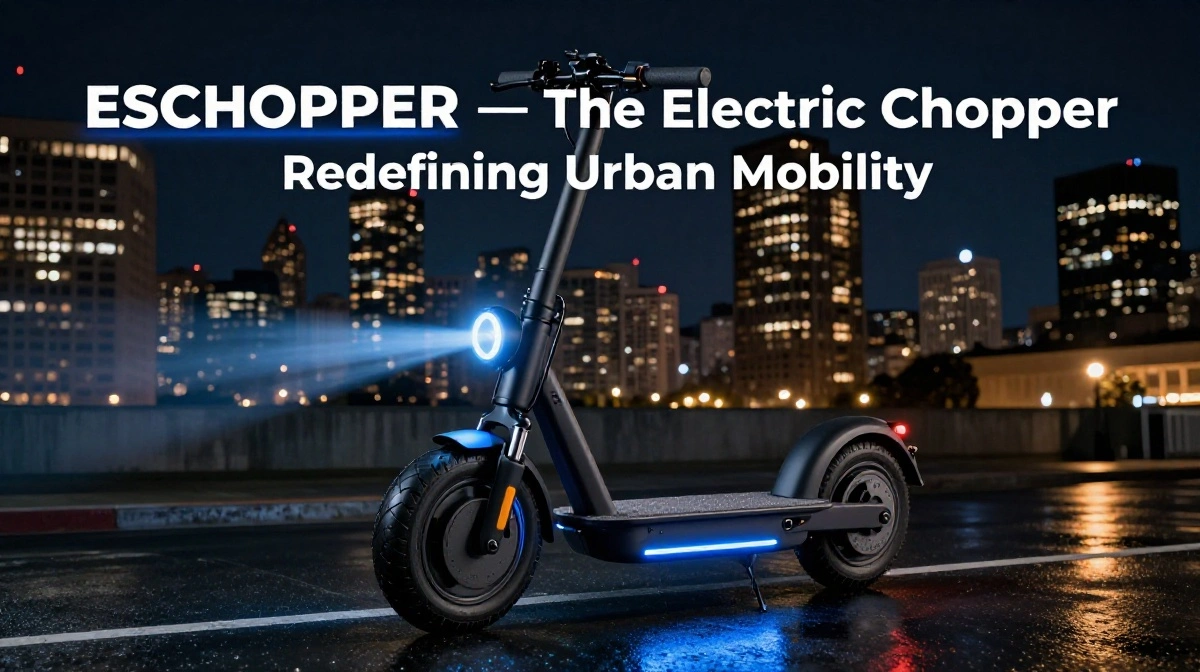
You’ve probably noticed something different on city streets lately. It’s not a motorcycle, and it’s definitely not a standard scooter. It’s an eschopper — a battery-powered ride that blends the unmistakable silhouette of a classic chopper with the clean, quiet performance of modern electric technology. Cities across the United States are increasingly choked with traffic, fuel costs keep rising, and urban parking has become a daily ordeal.
The eschopper addresses all three frustrations simultaneously. Whether you’re commuting to the office every day, running weekend errands across town, or simply looking for a smarter and more enjoyable way to navigate busy urban streets, this electric vehicle deserves your full and serious attention. Here is everything you need to know before buying.
What Exactly Is an Eschopper
The word eschopper combines “electric” and “chopper,” and that pairing describes this vehicle both accurately and completely. Picture the long, low frame of a classic cruiser motorcycle — swept-back handlebars, a relaxed riding posture, and a seat positioned close to the ground — then replace every mechanical engine component with a clean electric drivetrain.
Most models use brushless hub motors between 1,000 and 3,000 watts paired with lithium-ion battery packs ranging from 20Ah to 40Ah in capacity. There’s no fuel tank to fill, no engine oil to change, and no exhaust pipe emitting fumes into city air whatsoever.
You simply charge it at home overnight, twist the throttle the next morning, and go. It sits neatly between a standard kick scooter and a full-sized electric motorcycle, offering more stability and power than the former while remaining far more affordable and accessible than the latter for everyday American riders.
How the Eschopper Performs on City Streets
Riding an eschopper for the first time feels immediately intuitive and surprisingly accessible. Electric motors deliver torque the instant you engage the throttle, so acceleration from a standstill is smooth and confident rather than hesitant or sluggish. Clearing intersections quickly is a genuine safety advantage in dense city traffic.
Most mid-range models reach top speeds between 25 and 45 miles per hour, with real-world range sitting between 25 and 60 miles per charge depending on battery size and riding conditions. The low center of gravity created by the chopper-style frame keeps the ride remarkably stable, and fat tires — typically 10 to 12 inches wide — absorb road imperfections that would rattle a narrower scooter.
Hydraulic disc brakes on quality models deliver confident stopping power in all conditions. The overall experience is quieter, calmer, and far more enjoyable than fighting congested traffic daily behind a loud, expensive gas-powered engine.
The Design That Sets It Apart From Ordinary Scooters
Most electric scooters prioritize function to the point where every model looks nearly identical to the next. This vehicle takes a dramatically different approach to design. The elongated frame, extended front fork, high swept handlebars, and low seat height create a visual identity that genuinely turns heads at every red light.
This isn’t styling purely for aesthetic sake — each design choice serves a real ergonomic purpose as well. The relaxed riding position significantly reduces upper body fatigue over longer distances and daily commutes. The low seat height, commonly 26 to 30 inches from the ground, makes it approachable for riders across varying heights and experience levels.
Many current models also integrate digital dashboards, full LED lighting, and regenerative braking beneath that classic chopper exterior. The design communicates clearly that you don’t need to sacrifice personal style to make a genuinely responsible and practical transportation decision every single day.
Understanding Eschopper Costs and Long-Term Value
Sticker prices vary depending on specifications and overall build quality. Entry-level models start around $800 to $1,500, covering basic urban commuting needs effectively. Mid-range options featuring stronger 2,000-watt motors and larger battery packs fall between $2,000 and $5,000. Premium models can exceed $20,000 for buyers prioritizing maximum range and specialized construction quality.
The real financial story, however, lies in ongoing operating costs. Electricity to fully charge a typical battery costs roughly 30 to 50 cents at average U.S. residential rates. Maintenance expenses are minimal compared to any gasoline vehicle — no oil changes, no spark plugs, and no exhaust system repairs needed throughout the ownership period.
Brake pads and tires represent the primary recurring expenses after your initial purchase. When fuel savings, maintenance reductions, and avoided parking fees are honestly calculated across 12 months of daily commuting, most riders find the vehicle pays for itself faster than initially expected.
Eschopper Regulations and Legal Considerations Across the U.S.
Understanding your local laws matters more than almost any vehicle specification before buying. Classification varies significantly from state to state and determines whether you need a license, registration, or insurance coverage. Models with motors under 750 watts staying below 20 miles per hour are typically classified as electric bicycles in most U.S. states, requiring no special licensing.
More powerful models may fall under moped or motorcycle regulations, requiring formal registration and potentially a license endorsement added to your existing driver’s license. Some cities permit lower-powered versions in protected bike lanes, while others restrict all motorized vehicles from those paths.
California, New York, and Texas each apply meaningfully distinct rules affecting daily usability and legal operation. Checking with your state’s Department of Motor Vehicles before purchasing is genuinely essential rather than merely optional. Spending 30 minutes researching your city’s current regulations will prevent significant legal and financial frustration after delivery.
Environmental Benefits That Actually Matter to Cities
The environmental case for owning one of these electric vehicles is both straightforward and compelling for conscientious buyers. Because it runs entirely on battery power, it produces zero tailpipe emissions during every single mile of daily operation.
When charged from a grid increasingly incorporating renewable energy sources — which describes more U.S. regions every passing year — the lifetime carbon footprint drops dramatically compared to any gasoline scooter or traditional motorcycle on the market today. Beyond emissions, noise reduction is equally meaningful for urban neighborhoods.
Operating at typical city speeds produces roughly the same decibel level as a normal conversation between two nearby people, compared to the constant roar of gas engines. Neighborhoods with heavy two-wheeler traffic experience measurably less noise stress when riders switch to electric alternatives. Responsible buyers should research each manufacturer’s end-of-life battery disposal policies before committing money to any specific brand or model purchase.
Choosing the Right Model for Your Specific Needs
Matching the vehicle to your actual daily routine matters far more than chasing impressive numbers on a specification sheet. If your typical commute covers less than 15 miles each way on flat urban streets, a 1,000-watt motor paired with a 1,500Wh battery handles everything efficiently without unnecessary expenditure.
If your route involves hills, heavier cargo loads, or occasional two-up riding, stepping up to a 2,000- to 3,000-watt motor with rear suspension makes a meaningful real-world difference in both comfort and capability. Test riding at least two different models on comparable terrain tells you considerably more than reading online descriptions alone.
Pay close attention to throttle response, braking confidence, and how natural the ergonomics feel after 20 continuous minutes of riding. After-sales support quality — parts availability, warranty terms, and accessible service centers — matters enormously once your electric chopper reaches its first annual service milestone and components require professional attention.
Maintenance Habits That Protect Your Investment
Reduced maintenance requirements are a genuine advantage, but “less maintenance” absolutely doesn’t mean “zero maintenance ever.” Checking tire pressure weekly and inspecting tread depth monthly prevents the gradual degradation that leads to unexpected roadside failures at inconvenient moments far from home.
Brake pads on hydraulic disc systems should be checked monthly for remaining thickness, with rotors inspected regularly for wear grooves affecting performance. Battery care dramatically impacts long-term health and capacity: consistently charging between 20 and 80 percent rather than draining fully to zero or always topping to 100 percent can meaningfully extend usable battery lifespan by several years of daily riding.
Storing the battery at approximately 50 percent charge during extended periods of non-use is equally important for long-term preservation. Most modern models support motor controller firmware updates, and applying these updates improves throttle response and regenerative braking efficiency noticeably across all riding conditions throughout every season.
How It Compares to Other Urban Transport Options
Placed alongside alternatives, the eschopper holds a genuinely compelling position in today’s urban transport market. Traditional gas scooters cost less upfront but generate ongoing fuel and maintenance expenses that accumulate quickly over 24 months of regular daily use. Standard electric kick scooters are lighter and more portable but offer far less range, power, and riding comfort for distances beyond five miles.
Full electric motorcycles deliver superior performance but carry significantly higher purchase prices and stricter licensing requirements across most U.S. states. Electric bicycles share this vehicle’s approachable licensing requirements but lack comparable motor power output and commanding road presence.
The eschopper uniquely combines achievable pricing, manageable licensing, meaningful range, and a riding experience that makes daily commuting feel genuinely worthwhile and enjoyable. For urban Americans covering moderate daily distances who value both practical reliability and personal style, this vehicle fills a distinct niche that nothing else currently matches.
Conclusion: Is the Eschopper Worth Buying in 2026
This vehicle has moved well beyond novelty status in American cities and deserves serious consideration from any regular urban commuter today. It addresses real transportation challenges — rising fuel costs, parking scarcity, and congested streets — with a practical, affordable, and genuinely enjoyable daily solution.
The combination of chopper-inspired design and modern electric engineering creates something neither traditional motorcycles nor standard scooters have managed to offer simultaneously at this accessible price point for average buyers. For city dwellers commuting 10 to 40 miles round trip, the eschopper represents exceptional value when total ownership costs are calculated honestly over time.
Define your actual commute requirements clearly, verify local regulations thoroughly, test ride multiple models before any final decision, and prioritize brands offering solid after-sales support. Done right, choosing an eschopper doesn’t simply solve your transportation problem — it makes you genuinely look forward to every single morning commute.