

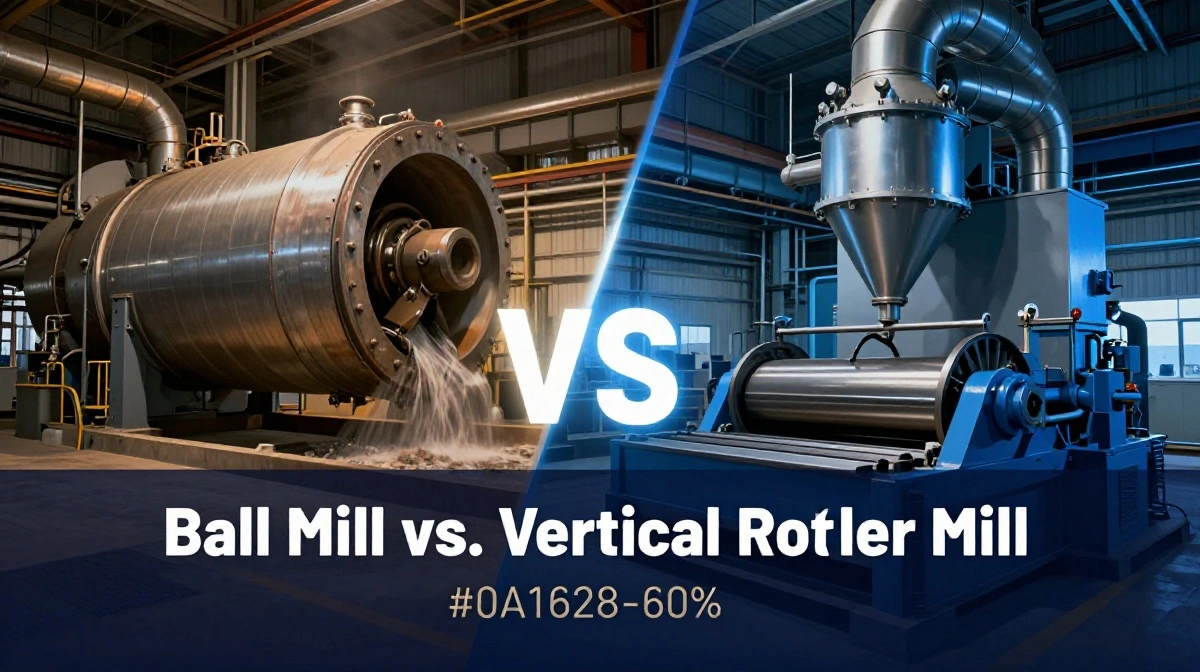
In modern cement and mineral processing industries, grinding technology plays a decisive role in determining production efficiency, energy consumption, and product quality. Among the most widely used systems today are the Ball Mill and the Vertical Roller Mill, both of which have unique advantages and limitations. For plant operators and investors, choosing the right grinding system can significantly impact long-term profitability and operational stability.
As industrial demand continues to rise, manufacturers are increasingly evaluating which system delivers better performance for modern applications. Companies like Cementl are helping plants upgrade their grinding systems by offering advanced engineering solutions tailored to both Ball Mill and Vertical Roller Mill configurations, ensuring optimal performance for different production needs.
Understanding how these two systems compare is essential before making a major investment decision.
Understanding the Ball Mill Grinding System
The Ball Mill is one of the oldest and most widely used grinding technologies in the world. It operates by rotating a cylindrical chamber filled with steel balls that crush and grind raw materials into fine powder through impact and friction.
A Ball Mill is known for its reliability and simplicity. It can handle a wide variety of materials, making it suitable for cement production, mineral processing, and other industrial applications. Many traditional plants still rely on Ball Mill systems due to their proven performance and relatively straightforward maintenance requirements.
However, energy consumption is one of the main challenges associated with Ball Mill operations. A Ball Mill typically consumes more power compared to newer grinding technologies, especially when producing fine materials. Despite this, its ability to deliver consistent output keeps it relevant in many industrial setups.
Cementl has worked with numerous plants to optimize Ball Mill systems by improving liner design, grinding media efficiency, and automation controls, helping reduce energy waste while maintaining stable production.
The Rise of the Vertical Roller Mill
The Vertical Roller Mill represents a more modern approach to grinding technology. Unlike the Ball Mill, which relies on impact and rotation, the Vertical Roller Mill uses a combination of compression and shear forces to grind materials between rotating rollers and a grinding table.
One of the key advantages of the Vertical Roller Mill is its energy efficiency. It consumes significantly less power compared to a Ball Mill, especially in large-scale cement grinding applications. This makes it an attractive option for manufacturers looking to reduce operating costs and improve sustainability.
Another advantage of the Vertical Roller Mill is its ability to integrate grinding, drying, and separation in a single system. This reduces equipment requirements and improves overall process efficiency in a Cement Production Line.
Cementl has been actively supporting the adoption of Vertical Roller Mill systems by providing customized designs that enhance grinding stability, reduce vibration, and improve material flow control.
Comparing Efficiency and Energy Consumption
When comparing the Ball Mill and Vertical Roller Mill, energy efficiency is often the most important factor for plant operators. A Ball Mill generally requires higher energy input due to its grinding mechanism, which relies heavily on impact forces.
In contrast, the Vertical Roller Mill uses pressure-based grinding, which significantly reduces energy consumption. This difference becomes even more important in large-scale operations where electricity costs represent a major portion of total production expenses.
A modern Cement Production Line aiming for energy optimization often favors the Vertical Roller Mill because of its lower specific power consumption and higher grinding efficiency. However, the Ball Mill still remains valuable in certain applications where flexibility and material compatibility are more important than energy savings.
Cementl helps manufacturers evaluate both systems based on production goals, ensuring that each plant selects the most cost-effective solution for its specific requirements.
Product Quality and Operational Stability
Product quality is another critical factor in choosing between a Ball Mill and a Vertical Roller Mill. The Ball Mill is known for producing a very fine and uniform particle size, which is beneficial in certain types of cement and mineral applications.
The Vertical Roller Mill, on the other hand, offers better control over particle size distribution and moisture content. This results in more consistent product quality and improved performance in downstream processes.
In terms of operational stability, the Vertical Roller Mill generally offers better automation integration. Modern systems can adjust grinding pressure, airflow, and material feed in real time, improving efficiency and reducing human intervention.
Cementl incorporates advanced monitoring systems into both Ball Mill and Vertical Roller Mill setups, helping operators maintain consistent output quality while minimizing downtime.
Maintenance and Long-Term Operating Costs
Maintenance requirements differ significantly between the two systems. A Ball Mill has fewer complex components, making it relatively easier to maintain. However, it requires frequent inspection of grinding media, liners, and mechanical parts due to wear and tear.
The Vertical Roller Mill, while more advanced, can require specialized maintenance skills. However, it often results in lower overall wear rates because grinding occurs under controlled pressure rather than high-impact collision.
From a long-term cost perspective, the Vertical Roller Mill usually offers lower operating expenses due to its energy efficiency and reduced wear. A Ball Mill may have lower initial investment costs, but higher ongoing operational costs can offset this advantage over time.
Cementl provides maintenance optimization strategies for both systems, helping plants extend equipment lifespan and reduce unexpected downtime.
Conclusion
Choosing between a Ball Mill and a Vertical Roller Mill depends on multiple factors, including energy costs, production capacity, product quality requirements, and long-term investment goals. Both systems have their strengths, and neither is universally superior in all situations.
The Ball Mill remains a reliable and versatile grinding solution, especially for plants with lower initial budgets or specific material requirements. The Vertical Roller Mill, however, is increasingly preferred in modern Cement Production Line setups due to its energy efficiency, automation capabilities, and improved operational performance.
With support from industry experts like Cementl, manufacturers can make informed decisions that balance cost, efficiency, and production goals. Ultimately, the right choice depends on aligning grinding technology with the long-term strategy of the plant, ensuring sustainable and profitable operations in a competitive industrial environment.
 IQ newswire