

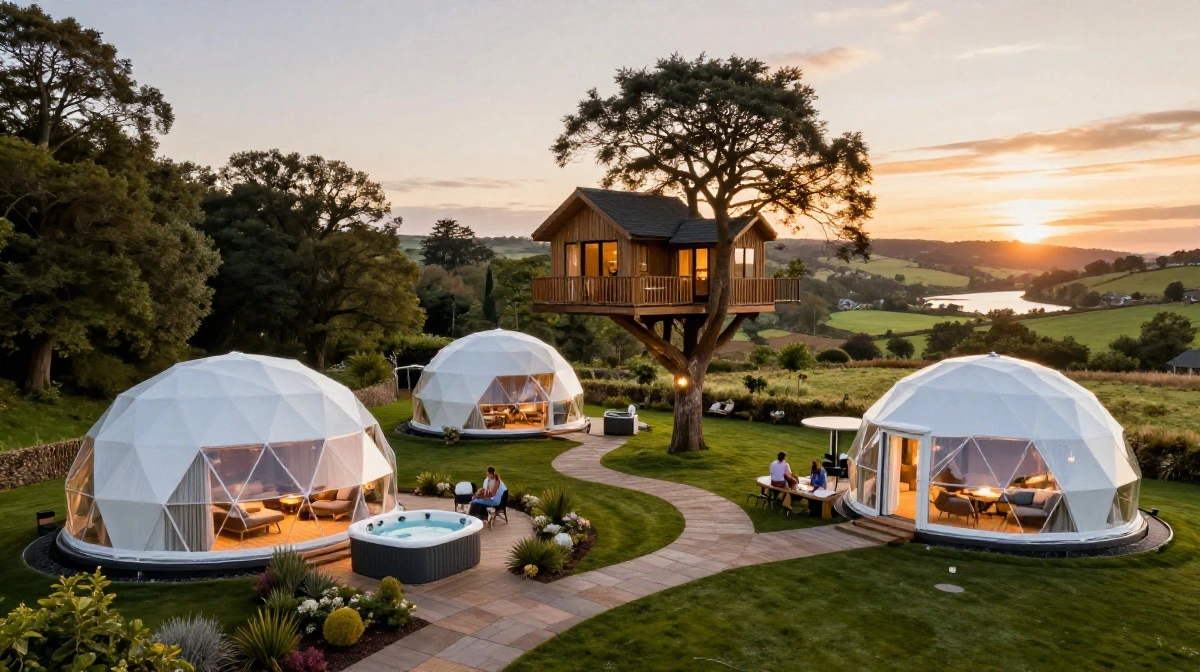
A decade ago, camping often meant sleeping bags, cold nights, and limited comfort. Today, travelers are spending hundreds of pounds per night to stay in luxury domes, treehouses, safari tents, and eco-pods equipped with hot tubs, Wi-Fi, and premium amenities. The Glamping Economy has evolved from a niche travel trend into a rapidly growing sector of the hospitality industry, particularly across the United Kingdom. From landowners seeking new income streams to travelers prioritizing experiences over traditional hotel stays, glamping is reshaping how people connect with nature while enjoying modern comforts.
What Is the Glamping Economy?
The Glamping Economy refers to the economic ecosystem built around luxury camping experiences. Unlike traditional camping, glamping combines outdoor environments with upscale accommodation and hospitality services.
Popular glamping accommodations include:
- Luxury safari tents
- Geodesic domes
- Treehouses
- Eco-pods
- Shepherd’s huts
- Yurts
- Floating cabins
The sector generates revenue through accommodation bookings, food services, wellness experiences, outdoor activities, and experiential tourism packages. In the UK alone, the glamping market generated hundreds of millions of pounds in revenue and continues to expand steadily.
Why the Glamping Economy Is Growing So Fast
Several major trends have accelerated the growth of the glamping industry.
Experience-Driven Travel
Modern travelers increasingly prioritize memorable experiences over material possessions. A weekend in a forest treehouse often feels more valuable than a standard hotel stay.
Research indicates that nearly 60% of UK adults have either experienced glamping or plan to do so in the future.
The Staycation Effect
Domestic tourism across Britain surged after the pandemic and remains strong due to rising international travel costs. Luxury countryside escapes have become attractive alternatives to overseas holidays.
Social Media Influence
Instagram, TikTok, and travel blogs have dramatically increased visibility for unique accommodations. Properties featuring hot tubs, panoramic windows, and stunning landscapes frequently achieve viral exposure.
Sustainability and Eco-Tourism
Many consumers actively seek environmentally responsible travel experiences. Eco-friendly glamping resorts appeal to travelers wanting lower-impact holidays while still enjoying comfort.
UK Glamping Market by Accommodation Type
| Accommodation Type | Market Demand | Key Benefits |
|---|---|---|
| Cabins & Pods | Very High | Privacy, comfort, year-round use |
| Treehouses | High | Unique experiences, premium pricing |
| Luxury Tents | Growing | Lower setup costs |
| Geodesic Domes | Rapid Growth | Instagram appeal, versatility |
| Yurts | Moderate | Traditional experience with luxury |
According to recent market research, cabins and pods accounted for over 46% of UK glamping revenue due to their comfort, security, and weather resistance.
How Landowners and Investors Benefit
The Glamping Economy has created substantial opportunities for rural landowners and hospitality investors.
Additional Revenue Streams
Farmers and rural property owners increasingly diversify their income through glamping developments. A relatively small investment can generate significant annual returns compared to traditional agricultural use.
Lower Startup Costs
Compared with hotels or resorts, many glamping projects require:
- Lower construction costs
- Faster setup times
- Reduced staffing requirements
- Flexible expansion options
Premium Pricing
Luxury glamping experiences often command prices comparable to boutique hotels, particularly when offering:
- Private hot tubs
- Wellness packages
- Outdoor dining experiences
- Unique architecture
- Exclusive locations
The Biggest Trends Shaping the Future of Glamping
The glamping industry is evolving rapidly.
Workation Experiences
Remote work culture has created demand for longer stays. Guests increasingly seek accommodations that combine:
- Fast internet
- Dedicated workspaces
- Nature experiences
- Flexible booking options
Luxury Wellness Tourism
Many operators now integrate:
- Spa treatments
- Yoga retreats
- Forest bathing
- Wellness workshops
- Mindfulness experiences
Treehouse and Cabin Dominance
Industry data suggests that premium cabins and luxury treehouses are becoming the most profitable accommodation types due to their strong repeat booking rates and year-round appeal.
Personalized Guest Experiences
Successful operators focus less on accommodation itself and more on creating memorable experiences, including:
- Stargazing packages
- Guided outdoor activities
- Local food experiences
- Private events
- Seasonal experiences
Challenges Facing the Glamping Economy
Despite its growth, the industry faces several challenges.
Market Saturation
Some regions have become increasingly competitive. Simply placing a luxury tent on a field is no longer enough to attract customers. Unique selling propositions have become essential.
Rising Customer Expectations
Guests now expect:
- Reliable Wi-Fi
- High-quality bathrooms
- Climate control
- Premium bedding
- Exceptional service
Planning and Regulation
Many operators face challenges involving:
- Local planning permissions
- Environmental regulations
- Tourism licensing
- Infrastructure costs
Real-World Example: Why Smaller Glamping Sites Often Win
One trend repeatedly highlighted by industry operators is that smaller, experience-focused properties frequently outperform large-scale developments.
Guests increasingly value:
- Privacy
- Authentic experiences
- Personalized service
- Natural surroundings
- Unique accommodations
Operators offering exclusive experiences often achieve stronger occupancy rates and higher customer loyalty than larger competitors focused solely on volume.
Frequently Asked Questions
What is the Glamping Economy?
The Glamping Economy refers to the growing industry surrounding luxury outdoor accommodations, including treehouses, domes, pods, yurts, and premium camping experiences.
Why is glamping becoming so popular?
Consumers increasingly seek unique experiences, sustainable travel options, and nature-based escapes without sacrificing comfort or convenience.
Is the UK glamping market still growing?
Yes. Industry forecasts suggest continued growth through 2030 and beyond, supported by domestic tourism and experience-based travel trends.
What type of glamping accommodation performs best?
Cabins, pods, and luxury treehouses currently generate the strongest market demand due to comfort, privacy, and year-round usability.
Is glamping a good investment?
For properly located and differentiated properties, glamping can provide attractive returns with relatively lower startup costs than traditional hospitality businesses.
What challenges do glamping businesses face?
Major challenges include competition, planning regulations, seasonality, and increasingly sophisticated customer expectations.
Key Takeaways
- The UK Glamping Economy continues to experience strong growth.
- Travelers increasingly prioritize experiences over traditional accommodation.
- Cabins, pods, and treehouses dominate premium demand.
- Successful operators focus on unique experiences rather than volume.
- Sustainability and wellness tourism are shaping future opportunities.
For investors, landowners, and hospitality entrepreneurs, the Glamping Economy represents one of the most dynamic sectors within modern experiential travel.