

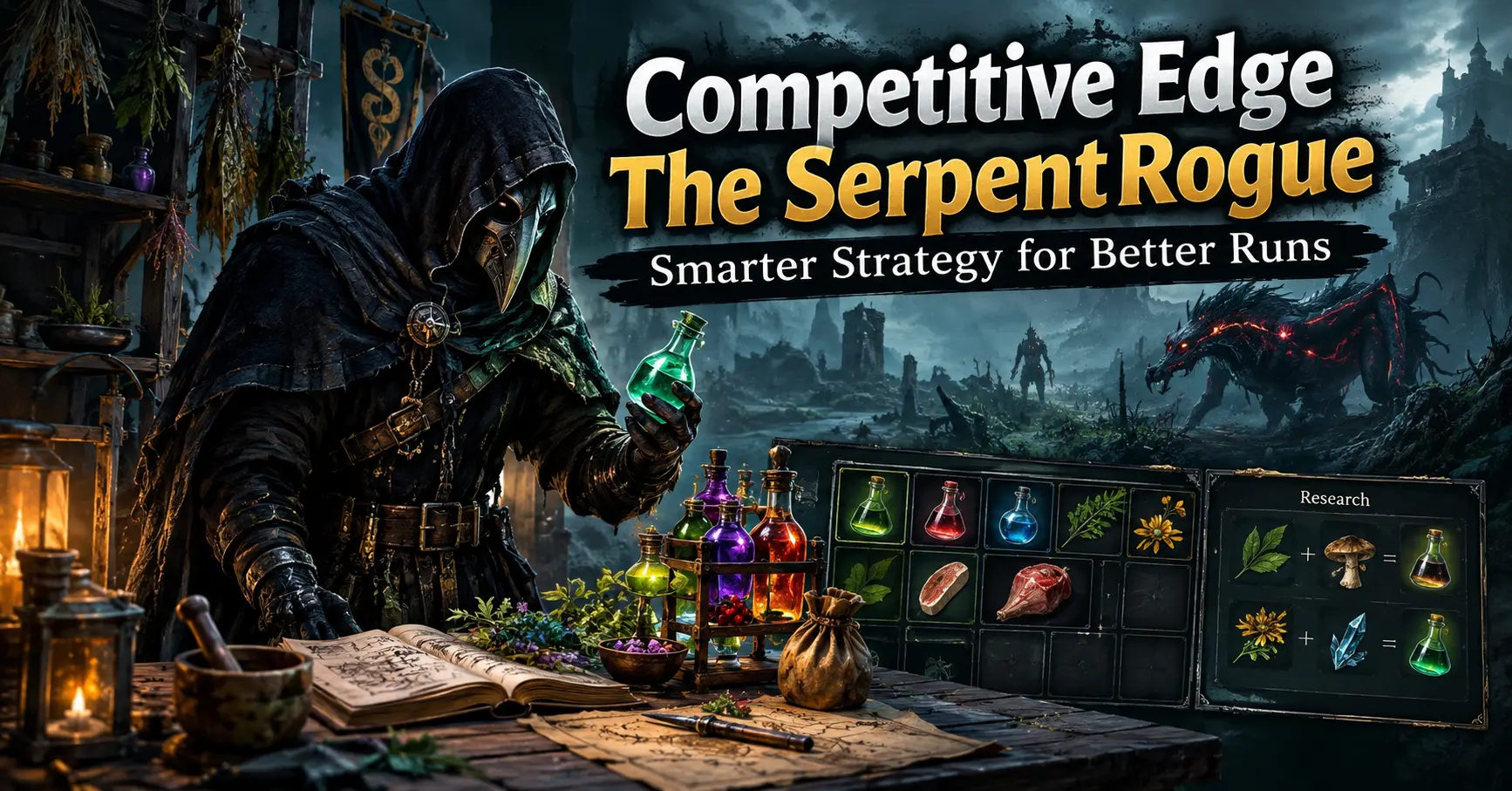
Ever feel like The Serpent Rogue punishes you for fighting the wrong battle at the wrong time? That frustration is the clue to its design. The competitive edge the serpentrogue offers isn’t a hidden stat, online ranking, or magic weapon; it’s the ability to understand systems and make better decisions before trouble starts. The game launched in 2022 as a single-player action-adventure with roguelite elements, placing The Warden in a corrupted world where alchemy, exploration, creatures, and cause-and-effect mechanics overlap. Team17 highlights research, potion crafting, exploration, and consequences as core features. That means your advantage comes from preparation, experimentation, and knowing when not to take a fight. It helps newcomers and returning players.
What Competitive Edge The SerpentRogue Really Means
The phrase competitive edge the serpentrogue can sound like a multiplayer term, but The Serpent Rogue doesn’t work that way. There is no conventional PvP ladder where you beat another player for a higher rank. Instead, compare your next run with your previous one. If you waste fewer ingredients, survive more encounters, and reach objectives with less panic, you’ve created an advantage.
That advantage comes from system mastery. You learn which ingredients matter, which situations justify combat, how creatures behave, and when escape is better than victory. Team17 describes a sandbox roguelike where locations and items can be randomized by storms, so rigid memorization isn’t enough. You need adaptable rules.
A useful question is: “How do I make this situation safer before the fight begins?” That shift changes how you explore, craft, carry items, and spend health. It makes difficult areas more manageable.
Alchemy and Competitive Edge The SerpentRogue
If you want one area to prioritize, make it alchemy. Team17 calls alchemy a key ingredient of gameplay and explains that players research ingredients, experiment with mixtures, and use potions in different ways. This system turns curiosity into practical power.
The mistake is treating every ingredient as something to throw into a random recipe. Research deliberately and remember useful results. When you discover a reliable effect, treat that knowledge as permanent progress. You don’t need a huge inventory of finished potions if you understand how to reproduce the effects you actually use.
Alchemy also creates flexibility. Potions can support survival, combat, transformation, or environmental problems, while shapeshifting and creature interactions add more possibilities. Team17 describes transformations for both the Warden and creatures.
Research unfamiliar materials while safe, keep a reserve of proven consumables, and experiment when failure is manageable. It makes preparation easier.
Exploration, Resources, and a Stronger Competitive Edge
Exploration becomes easier once you stop treating the map like a checklist. The Serpent Rogue rewards players who notice routes, resources, and environmental consequences. Locations and items can be randomized, so exploration requires learning and adaptation.
Resource management is where many good runs collapse. Carrying every interesting item feels productive, but inventory limits force choices. A rare ingredient may matter more than ordinary loot, while a familiar healing option can beat an unknown item.
Before picking something up, ask: Will I use it soon? Is it difficult to replace? Does carrying it create a better option than what I already have? If the answer is no to all three, leaving it behind can be smarter.
| Resource | Priority | Best Use |
|---|---|---|
| Healing items | High | Survival |
| Rare ingredients | High | Research |
| Known potions | High | Encounters |
| Common materials | Medium | Crafting |
| Unnecessary loot | Low | Leave |
Carry what supports next decision. Smart inventory choices protect future options.
Combat Preparation Beats Aggression
Combat can tempt you into a simple loop: see enemy, attack enemy, repeat. That approach can waste the advantage you’ve built through exploration and alchemy. A stronger strategy is deciding whether an encounter is worth taking.
Check your health, potions, surroundings, and escape route. If an enemy blocks something essential, preparation may justify the risk. If you’re fighting only because it is nearby, walking away can be better. Team17 notes that challenges can be approached through direct combat, timed alchemic potions, or befriending and taming beasts. That variety adds depth.
Positioning matters too. Leave room to retreat. Avoid spending a valuable consumable to finish a low-value encounter faster. When you fight, use tools that reduce risk instead of relying on basic attacks.
The combat advantage is control. Enter with a plan, a reason, and an exit. If one is missing, pause before engaging.
Corruption and Cause-and-Effect Systems
One of The Serpent Rogue’s most interesting advantages comes from understanding consequences. Your actions can influence what happens around you. Team17 gives clear examples: leaving food can attract vermin, while unburied bodies can draw ghouls. Preparation becomes part of survival.
Every action can have a second-order effect. Moving items, leaving creatures in one place, ignoring problems, or entering without a plan may create trouble later. Noticing these connections prevents problems before they become fights.
Corruption also changes how you plan movement. Look for patterns and adjust your route or supplies before danger appears. You don’t need to predict every event, only recognize when a small precaution prevents a larger cost.
That is where cause-and-effect design becomes a genuine advantage. Knowledge lets you spend fewer resources solving problems that could have been avoided. Prevention is cheaper than recovery. That mindset rewards planning carefully consistently.
Build a Repeatable Run Strategy
A strong run doesn’t need a complicated build. It needs a repeatable process that reduces bad decisions. Start by preparing before leaving a safe area: review your inventory, keep useful potions accessible, and decide what objective you’re pursuing. Don’t carry unrelated items.
During exploration, gather selectively and observe before committing. Research valuable ingredients when practical. In dangerous areas, identify a retreat path before moving deeper. Small decisions reduce emergencies.
When an encounter becomes unavoidable, switch from exploration mode to survival mode. Use prepared tools, watch your surroundings, and stop chasing an enemy if the situation turns bad. Afterward, reassess.
A useful rhythm is: prepare, explore, evaluate, engage when useful, then recover. The sequence can change, but the principle stays consistent. Repeatable habits beat flashy strategies. You learn what deserves space and what can wait. That reduces clutter and keeps attention on the objective.
Common Mistakes That Destroy Your Advantage
You lose your edge when activity replaces progress. Fighting every enemy, collecting everything, and testing potions in dangerous areas feels productive, but each choice carries a cost. Useful decisions matter.
One common mistake is entering combat without an exit. A second enemy or depleted resource can change the situation. Another is filling your inventory with low-value items.
Random experimentation is another trap. Experimentation is central to the game, but timing matters. Test unfamiliar combinations when failure won’t ruin a valuable run. Keep proven options available when you need certainty.
Ignoring environmental signals also wastes time. If an action attracts creatures or creates consequences, treat that result as information. Don’t repeat a mistake simply because the first result was survivable.
Fight with purpose, carry selectively, experiment safely, and treat failures as data. Apply one lesson each time. When you know why you’re fighting, carrying, or experimenting, mistakes become easier to diagnose and correct.
Pattern Recognition Creates Long-Term Competitive Edge The SerpentRogue
The most useful skill you can develop is pattern recognition. You don’t need every detail. Notice relationships: which preparation makes an encounter easier, which resources disappear fastest, which routes create unnecessary risk, and which actions repeatedly lead to trouble.
After a difficult run, review what happened. Identify one decision that saved resources and one that created risk. Change one habit next time. Small corrections are easier to test.
Keep simple notes on useful ingredient effects, combinations, environmental interactions, or mistakes. The goal isn’t homework; it’s avoiding repeated discoveries.
A new player may improve through reactions. An experienced player improves because every run adds information. That’s the real competitive edge the serpentrogue offers: observation makes repeated lessons unnecessary. You start preparing before danger appears, choosing routes with more confidence, and recognizing when an apparently good opportunity carries hidden costs. That is how experience turns into practical efficiency.
Conclusion: Build Your Competitive Edge The SerpentRogue
The competitive edge the serpentrogue isn’t about having the strongest weapon or winning a multiplayer contest. It’s about making the game more predictable through knowledge, preparation, and disciplined choices. Alchemy gives you flexible solutions, exploration teaches you where risk and opportunity appear, and resource management keeps those solutions available.
Prepare before danger, research instead of guessing, fight only when the reward justifies the cost, and learn from failed runs. Cause-and-effect systems make careful decisions valuable because small actions can create larger consequences.
For better results, don’t rush. Play deliberately, notice what works, and carry those lessons forward. Once your decisions become consistent, the game feels less like surprise and more like a system you can control. That is what a useful edge should provide.