

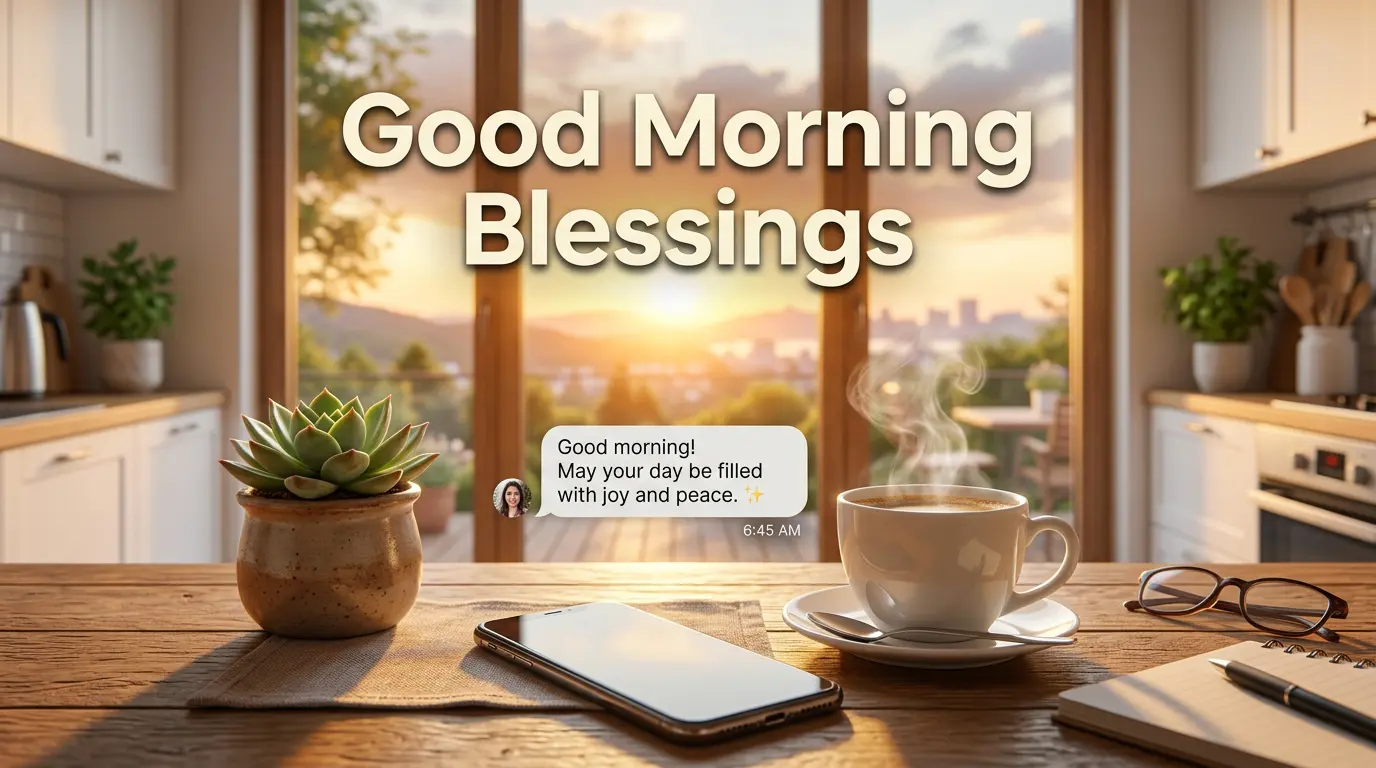
You wake up, grab your phone, and the first message says, “Praying you feel peace today.” Suddenly the day feels a little lighter. That’s the quiet power of good morning blessings.
Maybe you want to send one to a friend, a spouse, or a coworker having a rough month. Maybe you just need something for yourself. The trouble is that most pages hand you a pile of generic quotes and leave you guessing which one fits.
Here’s what I found after reading the top results: plenty of lines, almost no help choosing or writing them. So you’ll get both here, ready-to-use messages and a simple way to make them personal.
What Are Good Morning Blessings, Really?
A blessing is a wish for someone’s good. Good morning blessings pair that wish with the start of the day. They can be religious (“May God keep you close today”) or secular (“I hope today treats you kindly”). Both count.
Why do they matter?
- They make people feel noticed. A text takes 20 seconds but says, “You crossed my mind.”
- They set the tone. Many people find that starting the day with gratitude lifts their mood.
- They build a ritual. Sending one daily to a parent or friend gives you both something to look forward to.
The tradition is old. Many Christians lean on morning Bible verses like Psalm 5:3 and Lamentations 3:22-23, which describes mercies as new every morning. Others borrow from Jewish morning prayers or simple gratitude practices. You don’t need a faith background to send a kind wish, though.
One gap I noticed in competing pages: they rarely mention that the same line can feel warm to one person and awkward to another. A close friend who loves church language may adore “God’s favor over your day.” A coworker might prefer “Hope today goes smoothly.” Know your audience first.
How to Write Good Morning Blessings That Feel Personal
Skip the copy-paste. This four-step formula takes about a minute:
- Name the person. “Good morning, Dana” beats “Good morning.”
- Mention something real. Their interview, their sick kid, their long drive.
- Offer one wish. Peace, strength, patience, a good laugh. Just one.
- Keep it short. Two or three sentences is plenty.
Here’s how that looks:
- “Good morning, Dana. Big interview today. I hope you walk in calm and walk out proud.”
- “Morning, Dad. Hope the knee behaves and the coffee’s hot. Love you.”
- “Whatever today throws at you, may you find one quiet moment of peace.”
For faith-based good morning blessings, try: “May God go before you today and give you what you need, when you need it.”
Don’t write a paragraph. Long texts at 6 a.m. feel like homework. Short good morning blessings, around 15 to 25 words, get read and remembered.
Good Morning Blessings for Different People and Moments
The right message depends on who’s reading. These are lines I’d actually send:
- Friend who’s struggling: “No pressure to reply. I’m thinking of you and hoping today is gentler than yesterday.”
- Spouse or partner: “Good morning, love. Grateful for you before I’ve finished my coffee.”
- Someone grieving: “May you feel held today, even in the quiet moments. I’m here if you want company.”
- Someone sick: “Wishing you rest, comfort, and small good things today.”
- Kids heading to school: “Be kind, be brave, and have fun. I’m proud of you.”
- Monday morning blessings: “New week, fresh page. May the right doors open.”
- Coworkers: “Good morning, team. Wishing everyone a focused day and a decent lunch.”
If you’re stuck, ask what that person needs most: comfort, courage, or cheer. Then pick the line that matches. Good morning wishes work best when they answer a real need.
Mistakes to Avoid and Pro Tips for Sending
Sending the same forwarded image to everyone. People can tell, and it feels like a chain letter.
Using religious language with someone who hasn’t invited it. Match their comfort level.
Writing a long message when a short one lands better.
Also, don’t only message people when you need something.
Pro tips:
- Send between 6:30 and 8:00 a.m. in their time zone.
- Pair your message with a sunrise photo you took yourself. It feels more personal than stock art.
- Skip a day if you’ve got nothing real to say. Consistency matters less than sincerity.
- Save your favorite lines in a notes app so you’re never scrambling.
- Read your message out loud. If it sounds stiff, trim it.
- Use good morning blessings on yourself too. Read one aloud before you open email, like a short morning prayer.
FAQ,s
What are some short good morning blessings?
Try “Peace over your morning,” “May today be gentle with you,” or “Good things your way today.” Short ones work because they’re easy to read and hard to ignore. Aim for under 25 words, and add the person’s name so it sounds like you, not a quote site.
What’s a good Bible verse for a morning blessing?
Lamentations 3:22-23 is a favorite because it speaks of mercies being new every morning. Psalm 5:3 and Psalm 143:8 also fit well. Cite the reference, then add one personal line of your own so the message feels rooted and warm.
Can I send good morning blessings if I’m not religious?
Absolutely. Swap faith language for hope, peace, or gratitude: “I hope today brings you one good surprise.” A blessing is really just a kind wish. Honest, warm words work whether or not God is part of your vocabulary.
How often should I send a morning blessing?
Daily suits close family or a friend going through something hard. For everyone else, once or twice a week is plenty. If replies slow down, scale back or change your style.
What’s the difference between a blessing and a morning prayer?
A blessing is a wish spoken to someone (“may you have peace”). A prayer is spoken to God (“Lord, give them peace”). Many people use both. Choose based on your relationship and how comfortable the person is with faith language.
Conclusion
Good morning blessings don’t have to be polished to matter. Here’s what to remember:
- Match the message to the person and the moment.
- Use the name, detail, wish formula, and keep it short.
- Skip chain-style forwards.
- Send it when it’s sincere, not just routine.
Tomorrow morning, pick one person and send them a sentence. Don’t overthink it. You might be the reason someone’s day starts a little softer, and that’s worth 20 seconds.